

The Sensual Revolution: Touch
By Macy Andres

Notes On Sensuality is an exploration of everyday sensuality. Today we introducing the third edition of The Sensual Revolution, a monthly collection of sensorial musings intended to anchor the mind and galvanise physical curiosity.
Macy Andres is an aspiring writer and student of Linguistics & Political Science, with a special passion for the intersection of theory with fashion, literature and art.
The Modern English touch is derived from the Old French tochier (to touch, hit, handle); and further derived from the Latin vulgarity toccare (to hit, strike). In a literal sense, the word and its root meaning have a ‘hard and fast’ origin—it is brash, staccato, and fixed in application; fixed in a way that language has little regard for. With the passing of time and exchange of ideas, language prods until the word, once steely and exact, is soft and malleable. Touch is now in circulation as a noun and a verb, and carries a multiplicity of semantic connotations.
I start this dialogue with a definition because my meditations on a concept, or in this case, a sensation, always begin with reference to the word or phrase it selects. There is a hypothesis in Linguistic theory, Sapir-Whorf’s linguistic relativity, which posits that the structure of a language—the concepts deemed worthy of lexical inclusion and the internal relationship shared by certain words or word-stems—has the ability to mould our conception of reality. This understanding, I believe, is central to the dissection of touch—an action and experience I have long tried to pin head-on, but has always lingered tauntingly out of reach.
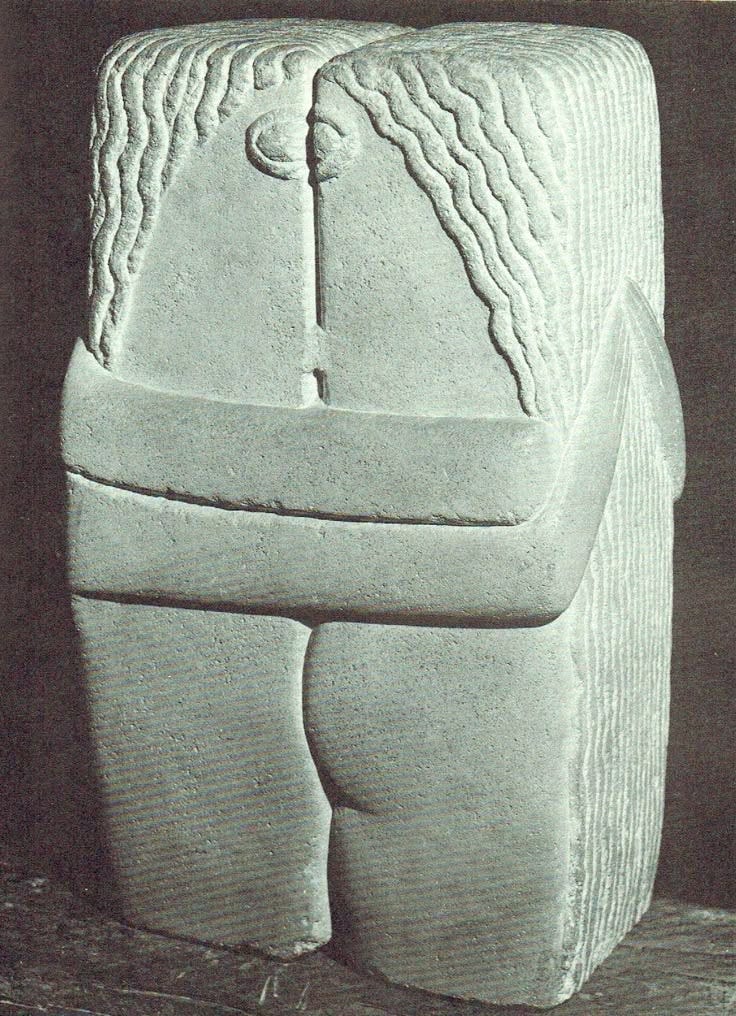
As a noun, touch refers to the sensation of physical contact. As a verb, touch is agentive; intentional. Notably, its jurisdiction has expanded so that touch can command the material and immaterial. I can touch someone’s shoulder, as can I touch their mind. This dualism goads me, and has done so from the moment I felt the strange desire, sudden in onset, to touch and be touched in return.
Touch, particularly of the intimate kind, is toted sacrosanct—and inversely, as a means of personal liberation. It’s steeped in semantic flourish, concerned with the self, and almost alien from its base biological imperative. An intimate binary, a set of opposed tactual philosophies, has been erected. There is love, and there is carnality. Is there nothing that lies in between?
Just as courage can do without self-respect, another’s touch can land without consequence for one’s appeal. So much of ‘no strings’ touch, I am led to believe, is motivated by the desire to feel desired oneself. I have been asking myself—do we trace a stranger’s skin; caress and kiss in the same manner as that with the people we love; not because we feel that same depth of affection, but because we feel self-gratification requires the guiding hand of another?

It’s not inherently our fault. Touch is foundational to human development. Reproductive touch fuses us, touch delivers us in vivo, it cradles us as children, it preens and grooms us, it connects us to our friends. It’s an inextricable element of human connection, and I believe that is why the word itself has evolved from existing simply in physical terms, to now encapsulate the emotional. It cannot be one, or the other. In spite of intention, touch penetrates the mind as much as the skin.
What is your touch philosophy?
By Macy Andres